February 9, 2026
Good Design Shouldn’t Cost the Earth

At October Custom Publishing, we make a conscious effort to use AI as little as possible. While it is already baked into many tools we use—humming in the background of almost every piece of software today—our policy is simple: good design over algorithmic speed.
We believe that good design shouldn't cost the earth. While the tech and telecom sectors race toward 90% AI adoption, we are choosing to pump the brakes. Good design is about intention and precision, not just output. And right now, the output of AI comes with a price tag that we aren't comfortable paying.
The Hidden Cost of a Query
AI adoption feels unavoidable, infiltrating everything from your phone's apps to your healthcare provider's billing systems. But while the software feels invisible, the infrastructure powering it is massive, physical, and incredibly thirsty.
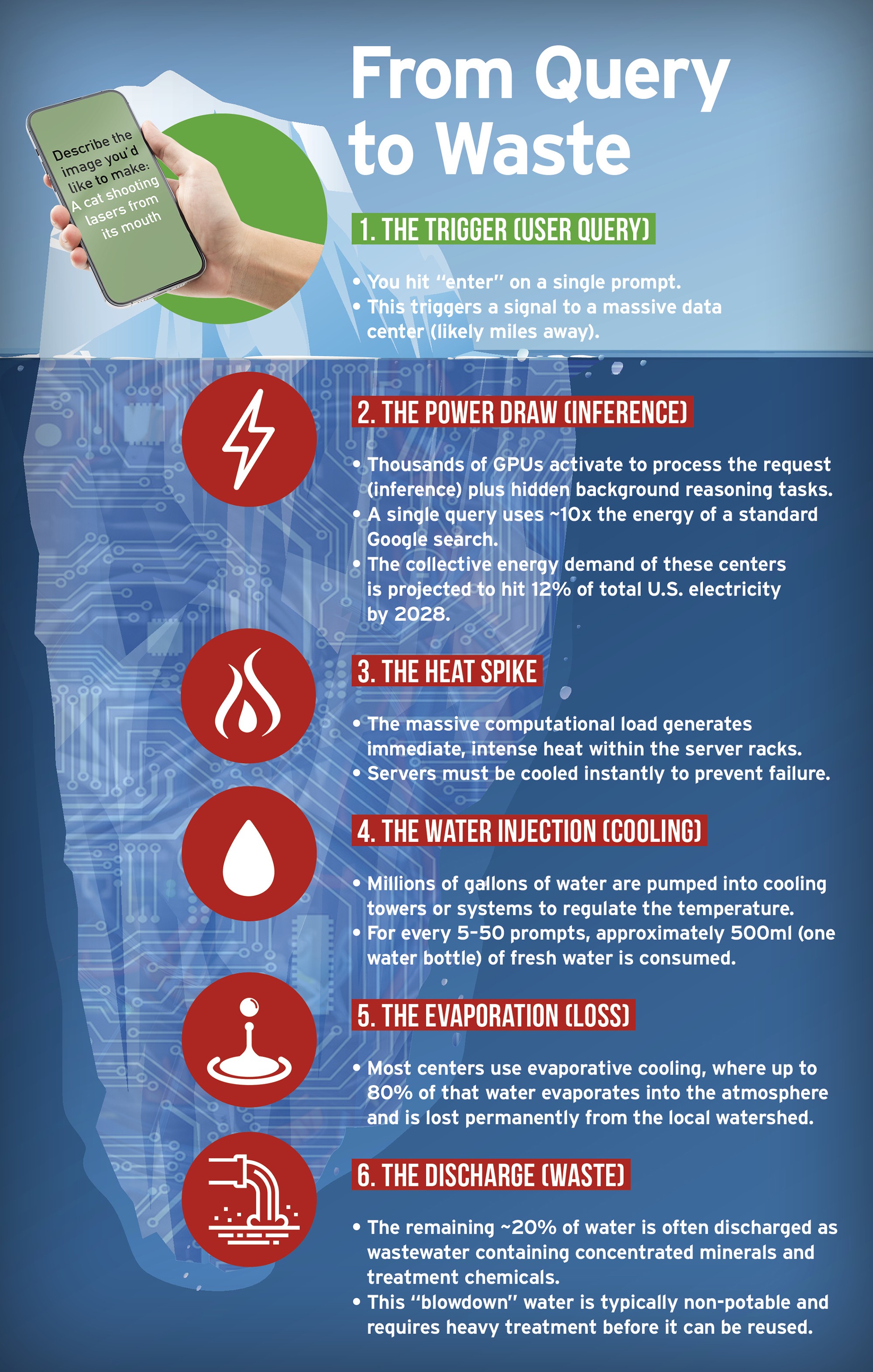
We tend to think of the "cloud" as weightless. In reality, it is millions of physical servers sitting in massive data centers. Estimates show that between 5 and 50 simple AI prompts can consume over 500 milliliters of water. That might not sound like much, but apply a "hidden multiplier" of millions of users running billions of queries, and the scale becomes terrifying.
It's estimated that less than a third of U.S. data center operators even measure their water usage meaningfully. Most still use decades-old evaporative cooling methods that lose up to 80% of their water.
The Power Problem
The energy demands are just as staggering. In 2023, data centers consumed 4.4% of U.S. electricity. By 2028, that number could nearly triple to 12%—an increase equivalent to adding the entire electricity consumption of France.
This isn't just about search bars and chatbots. By 2030, AI will be responsible for 50% to 70% of total data center computing. The infrastructure is being built to support a future where every industry—from Finance to Manufacturing to Healthcare—relies on power-hungry models.
Until the technology is properly regulated—and until this massive environmental cost is addressed—we will continue to prioritize precision and intention over speed. Because good design is sustainable design.

September 22, 2026

August 7, 2026